

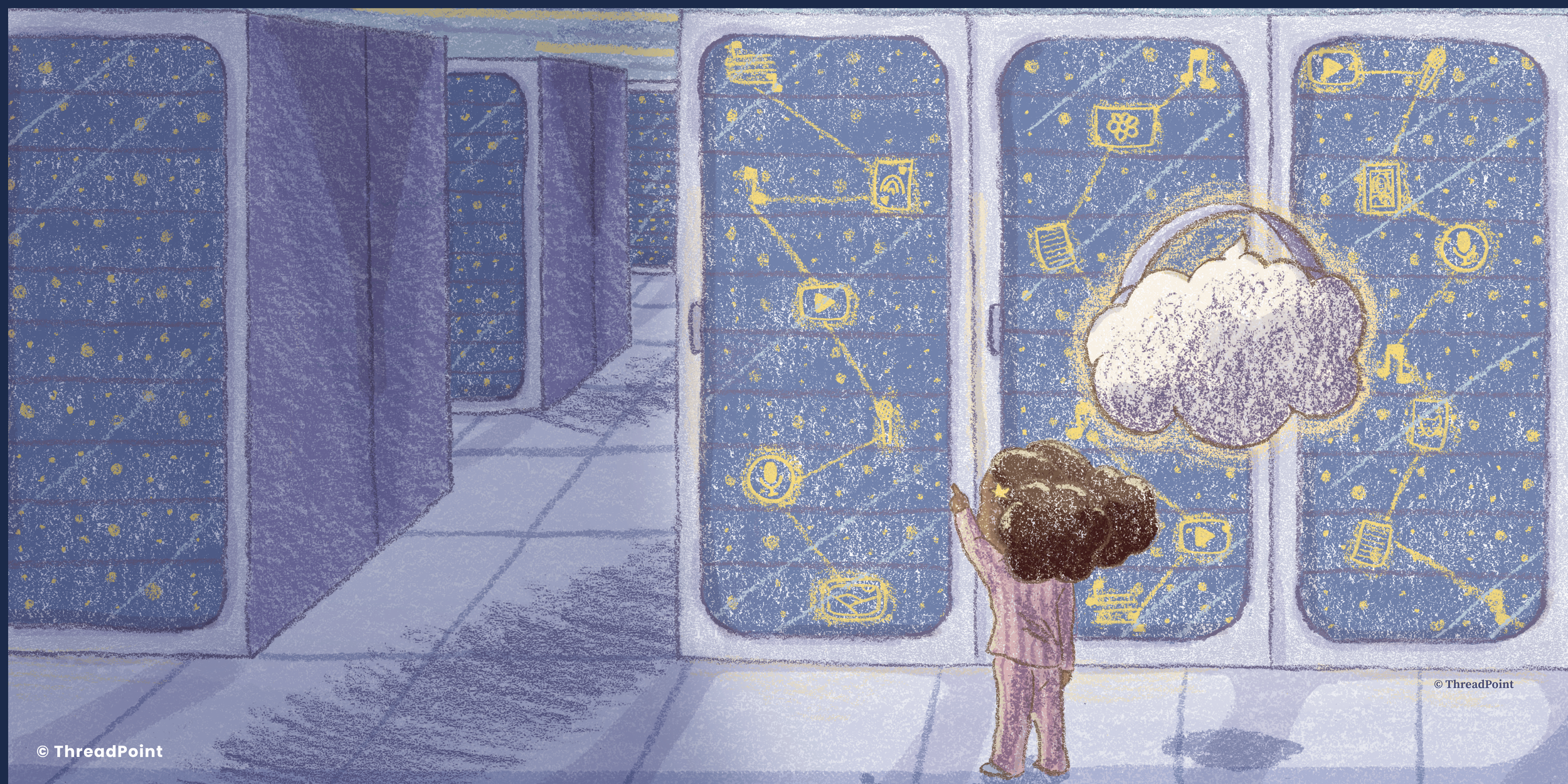
Welcome to ThreadPoint Learning Lab
Where curiosity meets the infrastructure behind our digital world.
Thank you for joining the ThreadPoint Learning Lab pilot. We’re delighted to welcome your school as we prepare to introduce pupils to the real systems, people and places that make the internet and AI possible.
Watch the short introduction below to see what we’ve been building.
What is ThreadPoint Learning Lab?
Inspired by our published children’s book, Where the Internet Goes to Sleep, by Willowmina Williams, ThreadPoint Learning Lab is an interactive, story-led programme designed for primary classrooms.
Through storytelling, exploration and discussion, pupils discover the physical infrastructure that supports their digital lives, from networks and power systems to cooling technologies and the people who keep everything running.
The programme at a glance
Six interactive lessons, delivered as part of a three-month pilot.
For Years 3 to 6 (ages 7 to 11), with versions for Years 3–4 and Years 5–6.
Each lesson is designed for about 45 minutes.
Teacher-led, using your classroom whiteboard.
Curriculum alignment
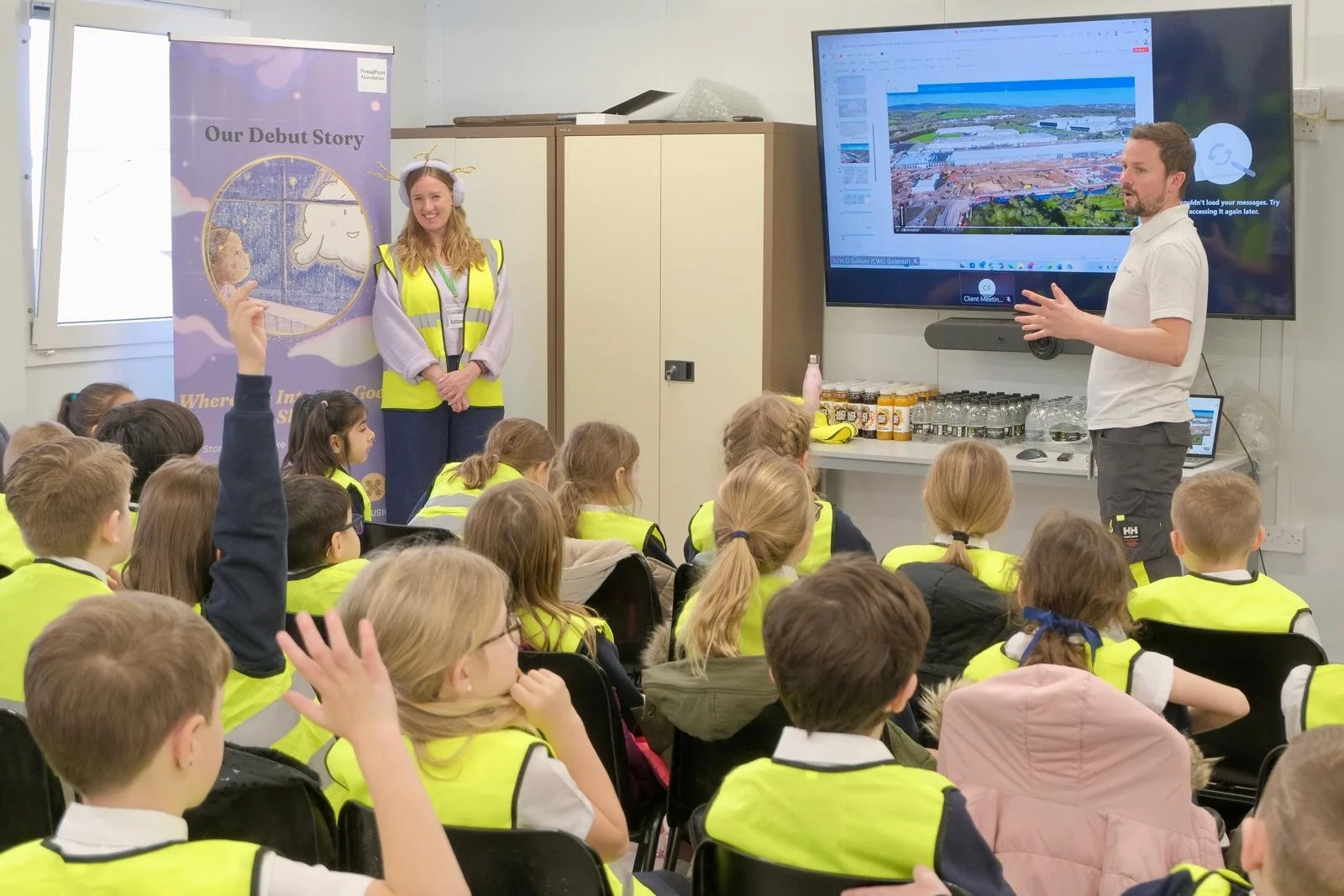
The Learning Lab is designed to fit within your existing primary curriculum. Select your curriculum to see how the lessons connect.
-
Computing (throughout, especially Lessons 1 and 2) Pupils understand computer networks, including the internet, and how they can provide multiple services, such as the World Wide Web. They follow a message from a tablet, over Wi-Fi and through cables, to the data centre where it is stored.
Science (Lessons 3 and 4) Builds on Electricity (Years 4 and 6), States of Matter (Year 4) and Properties of Materials (Year 5). The statutory curriculum focuses on simple circuits, conductors and insulators. These lessons extend that understanding by exploring how electricity reaches buildings, how backup power supports essential systems, and why electrical equipment produces heat that must be managed.
Geography (Lessons 5 and 6) Human geography: land use, economic activity, and the distribution of natural resources, including energy and water. Pupils weigh up where a data centre should be built, and who it might benefit or affect.
English (throughout) Spoken language: discussion, debate, and explaining and justifying opinions. Reading: the story Where the Internet Goes to Sleep.
-
For schools following the English National Curriculum, the Learning Lab connects to Key Stage 2 computing, science, geography and English, as set out for England.
It also supports the UAE National AI Literacy Curriculum Framework, in particular:
AI Foundations and Core Principles: understanding that AI tools run on real computers, networks and data centres.
Responsible and Ethical AI: considering the energy, resources and communities behind AI.
-
Computer Science (CSTA K–12 Computer Science Standards)
1B-CS-01: Describe how internal and external parts of computing devices function to form a system.
1B-NI-04: Model how information is broken down into smaller pieces, transmitted as packets through multiple devices over networks and the Internet, and reassembled at the destination. Lesson 2 traces how information travels through multiple devices and networks, laying the groundwork for learning about packets.
1B-IC-18: Discuss computing technologies that have changed the world, and express how those technologies influence, and are influenced by, cultural practices.
Science (Next Generation Science Standards)
4-PS3-2: Make observations to provide evidence that energy can be transferred from place to place by sound, light, heat, and electric currents.
4-ESS3-1: Obtain and combine information to describe that energy and fuels are derived from natural resources and their uses affect the environment.
5-ESS3-1: Obtain and combine information about ways individual communities use science ideas to protect the Earth’s resources and environment.
Social Studies (C3 Framework)
D2.Geo.8.3-5: Explain how human settlements and movements relate to the locations and use of various natural resources.
D2.Civ.9.3-5: Use deliberative processes when making decisions or reaching judgments as a group.
D2.Civ.10.3-5: Identify the beliefs, experiences, perspectives, and values that underlie their own and others’ points of view about civic issues.
English Language Arts (Common Core)
SL.4.1 and SL.5.1: Engage effectively in a range of collaborative discussions, building on others’ ideas and expressing their own clearly.
Many states adapt these standards. We’ll confirm the match with your state’s standards during onboarding.
What happens next?
We’re preparing everything for your January onboarding.
You’ll receive your pilot agreement over the coming days.
01 Your pilot agreement
Once your signed agreement is back with us, we’ll set up your school’s access to the Learning Lab.
02 Learning Lab access
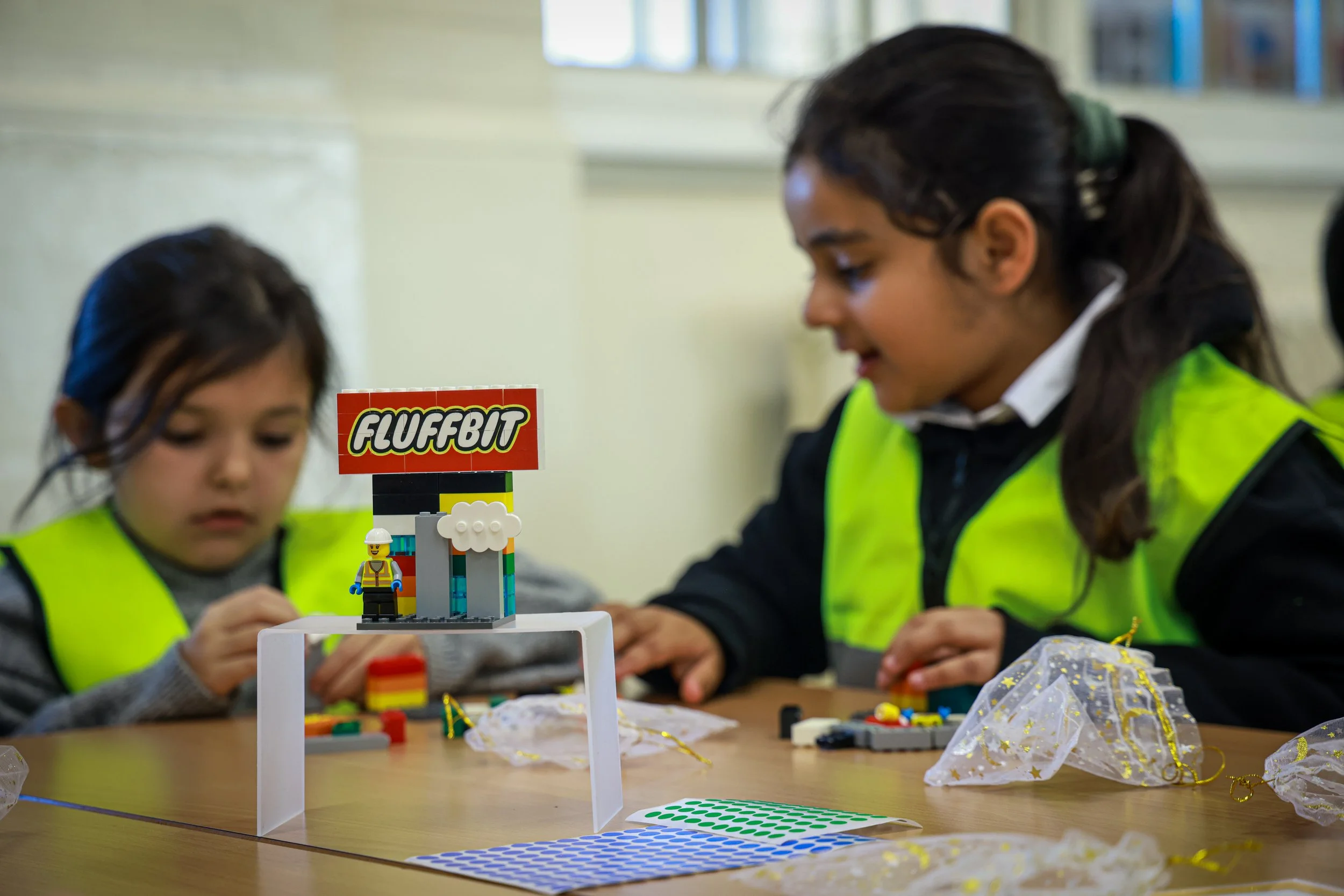
We’ll show you how to use the Lab and find your way around the lessons. You’re free to fit the six lessons into your timetable in whatever way works best for your class across the three months.
03 January onboarding
Have a question?
If you’d like to talk through the programme, the curriculum links or classroom delivery, you’re welcome to book a conversation with our founder, Willow.
We look forward to welcoming your pupils into the Learning Lab.
ThreadPoint Learning Lab
Imagination is infrastructure.